Insight
How Lovisenberg Increases OR Activity with AI

Published: 1. des. 2025
Author: Severin Sjømark
Hospitals in Norway face a constant and complex challenge in surgical planning: balancing long waiting lists with limited surgical resources, such as clinical staff and operating rooms. Traditional surgical planning is time-consuming and involves intricate trade-offs, ranging from staff well-being to prioritizing different patient groups.
This challenge has now been transformed at Lovisenberg Diakonale Sykehus (LDH). By implementing Deepinsight Hero, a modern solution that integrates advanced optimization and artificial intelligence (AI), LDH has found a new, data-driven way to manage planning complexity.
This article explores how Deepinsight Hero helps maximize operating room capacity, improve resource utilization, and ultimately drive a significant increase in surgical activity at LDH.
Surgical Planning
The first step in planning is allocating time to different procedure types and staffing them in advance, resulting in an activity plan. Next, this activity plan must be filled with specific surgical procedures as efficiently as possible, creating a tactical plan. Finally, patients are scheduled into these planned procedures, which is the operational planning phase.
Throughout all these planning stages, planners must weigh waiting lists, priority patient groups, staff well-being, and a large number of other constraints and conditions that influence what can be carried out and at what scale.
Deepinsight Hero is built on several core models, two of which strengthen the data foundation: a structured data model and a waiting list prediction model. Three additional models mirror the planning process: automatic activity plan suggestions for surgeons, automatic tactical plan suggestions, and a model that recommends which patients best align with the tactical plans.
Structured Data
Deepinsight Hero includes a built-in model that extracts essential information from free-text fields relevant to planning. This model, an LLM (Large Language Model), structures waiting list data describing patient status and special conditions. These can be whether the patient is cleared or prioritized, able to come on short notice, available or unavailable during certain periods, must wait, or whether the procedure requires or excludes specific resources. This not only simplifies planners’ daily work by removing the need to recall or search for this information manually, but it also provides structured data that becomes a critical input for the rest of the planning workflow.
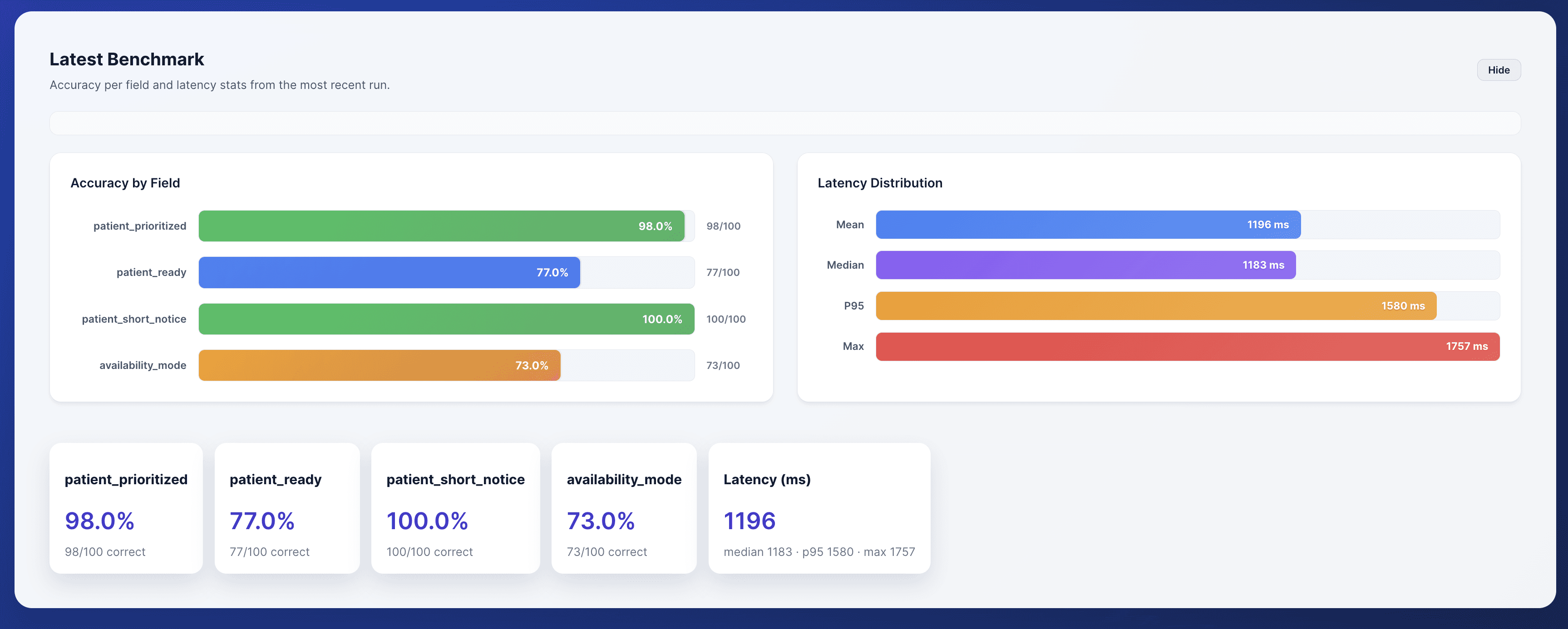
Figure 1: Internal evaluation tool screenshot showing accuracy and latency metrics for patient statuses predicted by the LLM on synthetic data that emulates production data.
Waiting Lists
To plan effectively in the mid-term (4–12 months), hospitals must understand how waiting lists are likely to develop. To anticipate what waiting lists will look like at the start of the planning period, often months ahead, Deepinsight Hero uses a model that predicts the number of incoming patients and subtracts those likely to be treated before the period begins. Using historical activity data and an advanced machine learning model, Deepinsight Hero forecasts future patient inflow while accounting for seasonal patterns. This ensures planning is based on actual future demand, not just today’s waiting list.
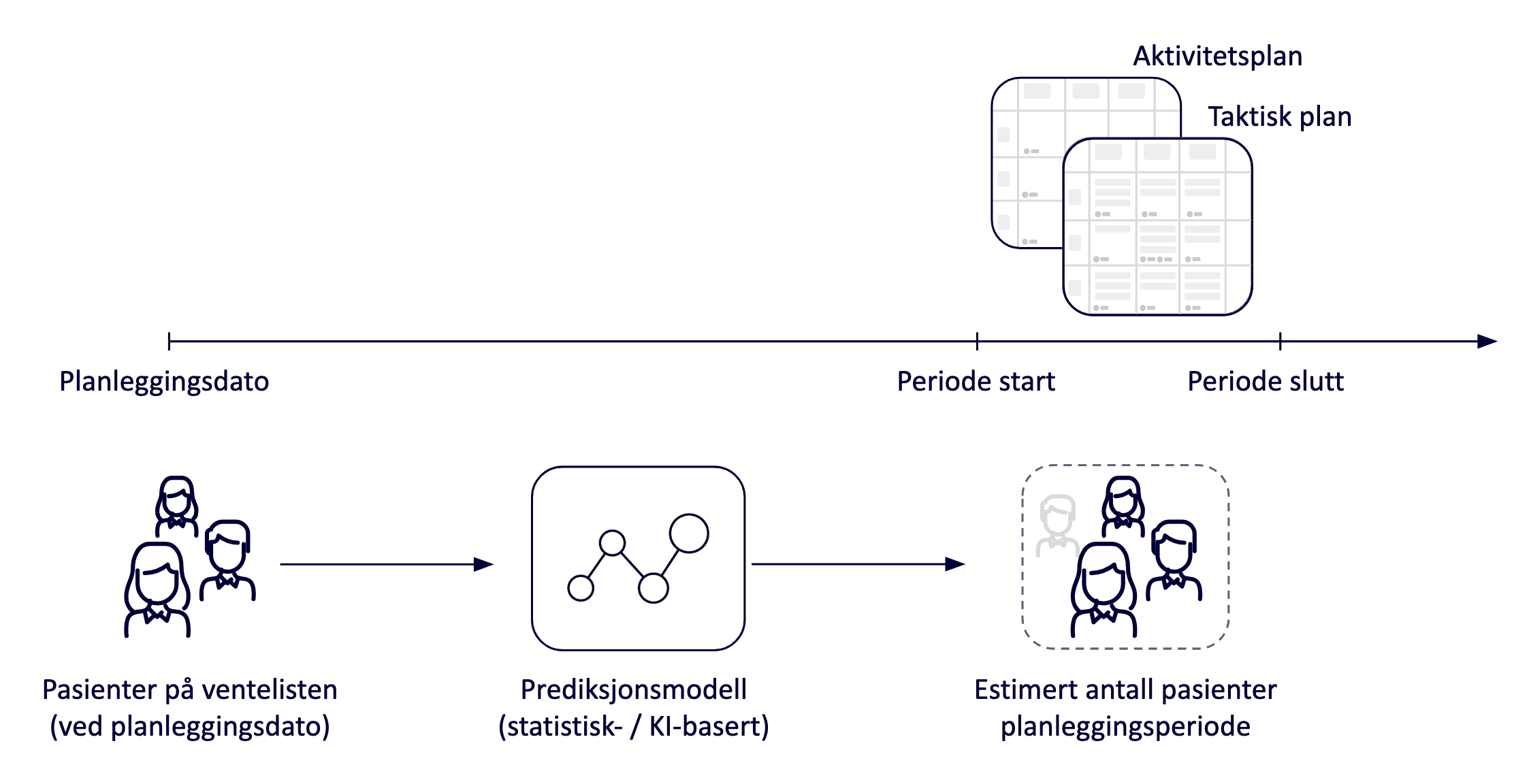
Figure 2: Planning period and waiting list forecast.
Activity Plan for Surgeons
Developing demand-driven activity plans for surgeons is resource-intensive. Deepinsight has created an optimization algorithm that identifies an optimal activity plan based on numerous constraints and factors.
The model uses AI to evaluate a huge number of combinations and scores them using an objective function tied to planning goals. Waiting lists, historical data, and statistics guide the algorithm’s activity suggestions. Deepinsight Hero uses a CP-SAT model (Constraint Programming solver with satisfiability methods), well-suited for highly constrained problems. It includes strategies such as parallelization, optimality gaps, and runtime limits to efficiently deliver high-quality results. The objective function balances waiting lists across patient groups, maximizes use of allocated resources, honors preferences with different priority levels, and supports surgeon satisfaction by distributing outpatient clinic days.
The model also supports pre-scheduled activities. It evaluates a massive number of combinations that would be impossible to manage manually and delivers optimized activity plans for surgeons in a fraction of the time. Unique users of this feature have increased steadily since Deepinsight Hero was introduced at LDH (see Figure 3). We observe that this has increased operating room utilization directly.
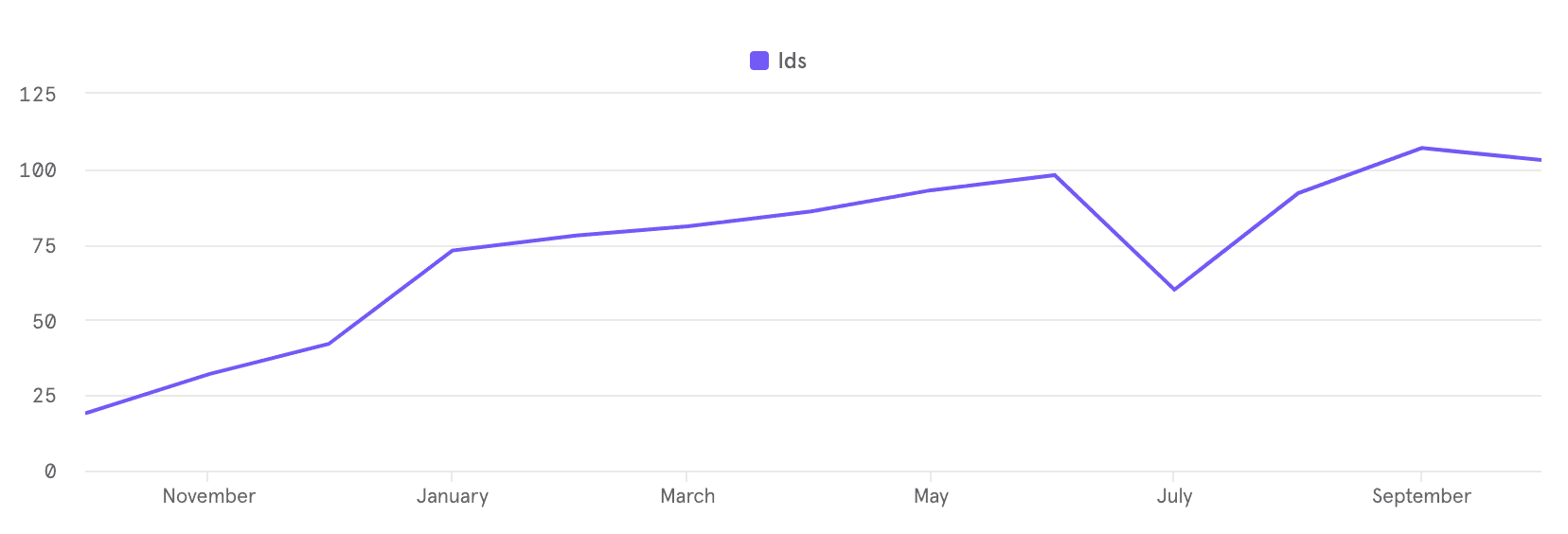
Figure 3: Unique users of the staffing and activity planning page.
Tactical Plan
This model generates proposed daily surgery schedules for each operating room across the entire planning period, once the activity plan for surgeons is set. The model is tailored to each hospital’s data and considers what constitutes “good operating schedules” based on historical data and domain expertise, as well as capacity constraints, priority patient groups, average procedure duration, and predicted waiting list development.
The underlying optimization algorithm is again a CP-SAT model, maximizing a defined objective function. This function balances program scores with waiting list reduction and rewards user-guided patient distribution, both to accommodate priority groups and to ensure fairness, even waiting times, and adequate patient volume. The model explores a much larger solution space than a human could evaluate manually, providing more robust and optimal daily schedules. Usage of the tactical planning system has also increased steadily at LDH (see Figure 4).
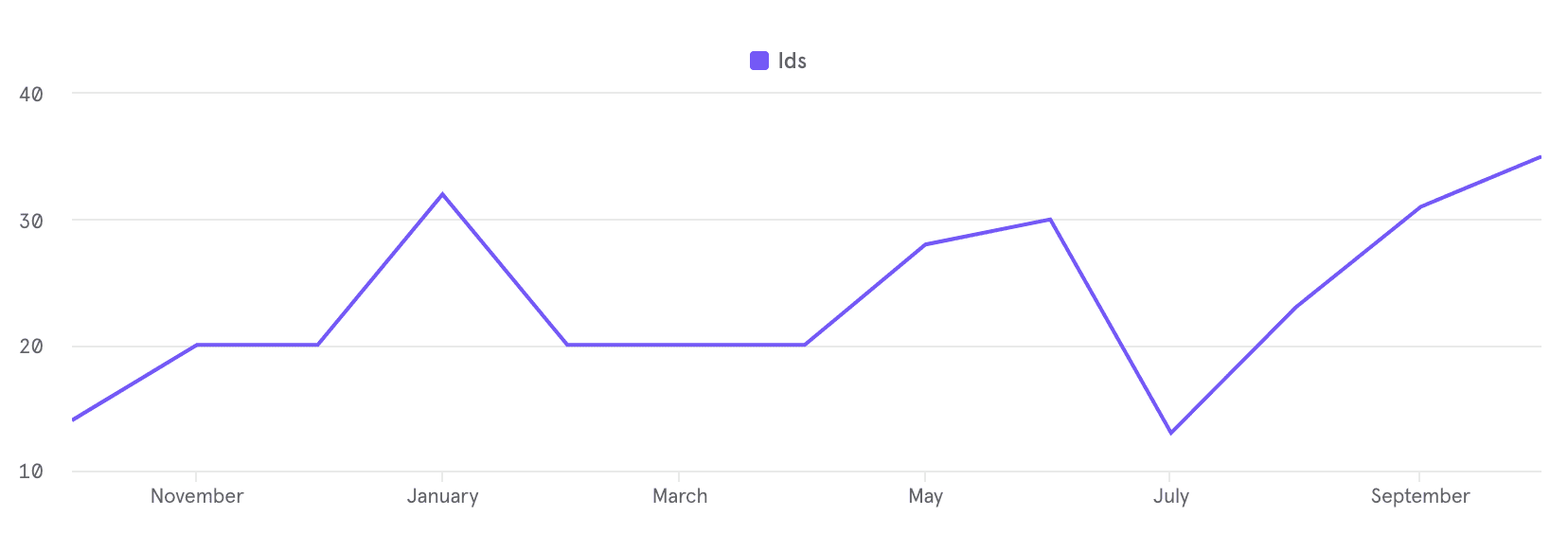
Figure 4: Unique users of the tactical planning page.
Patient Recommendations
Identifying the best patients for available surgical slots is complex and time-consuming. Deepinsight has developed a recommendation system that combines strict sorting rules with a transparent, configurable ranking using a Weighted Sum Model (WSM). The process has two steps:
Sorting: Patients are sorted first by urgency (priority before non-priority), then by their WSM score, which considers factors such as surgeon match, short-notice availability, clearance status, waiting time, and estimated OR time.
Grouping into strong and weak matches: The sorted list is divided into “Strong Matches” (patients who meet all criteria for a given slot) and “Weak Matches” (those who do not). This significantly reduces manual work while giving planners full control. Accurate machine learning models provide precise OR time estimations, helping maximize room utilization. A non-linear bonus score for short-notice patients enables the system to fill unexpected schedule gaps quickly and efficiently.
The model considers many parameters that would be extremely difficult to manage manually with a long waiting list. It is transparent and fully aligned with each hospital’s prioritization preferences. Patient suggestions and their outcomes are monitored and improved continuously, creating a continuous learning loop. As can be seen the conversion rate is high, and likely higher as not all clicks on patient suggestions occur in the context of booking.
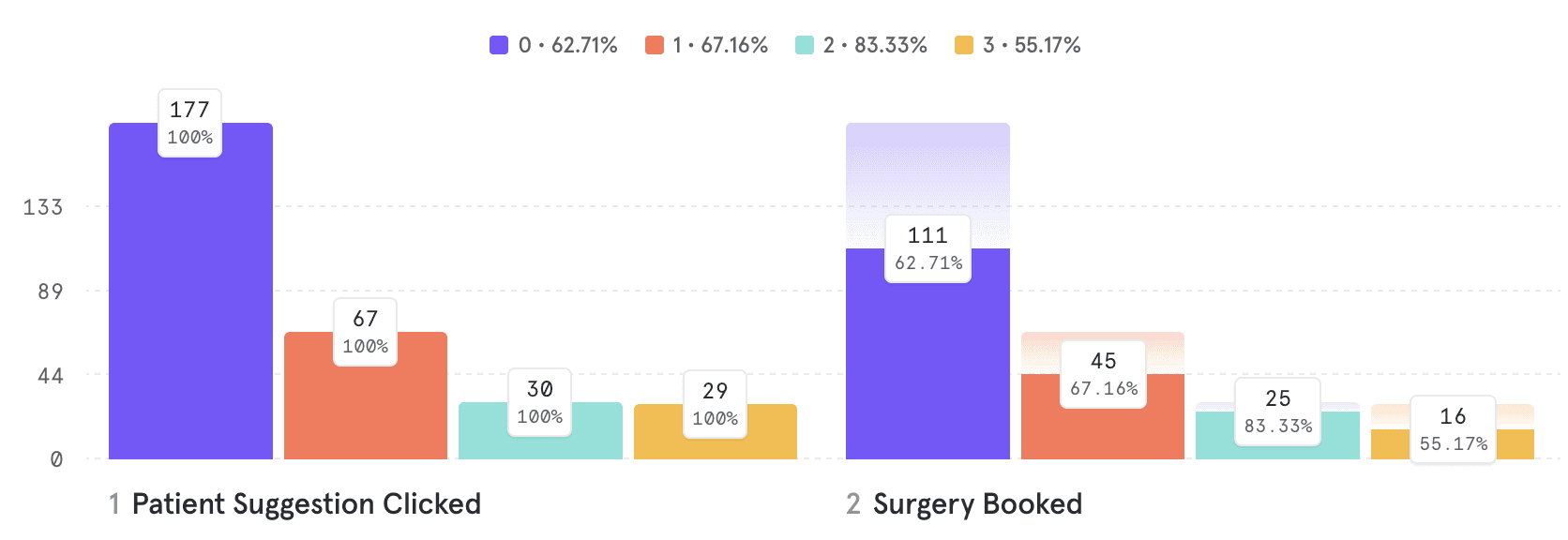
Figure 5: Conversion rate for the top four suggested patients over 30 days (0 = highest ranked). Note: Clicking a patient suggestion often occurs for reasons unrelated to booking, hence the actual conversion rate may be higher.
Through advanced AI and optimization models, Deepinsight Hero has delivered a 13% increase in surgical activity and a 30% reduction in overtime, becoming an invaluable support tool for planners at Lovisenberg. The solution transforms a complex, resource-heavy workflow into a streamlined, data-driven operation.
Built on the hospital’s own data and refined through close collaboration with planners, it not only improves their workday, reducing frustration, friction, and administrative burden—but also increases surgical throughput, strengthens resource efficiency, and ultimately improves patient care.